
cameras
Photography is a hobby that I have gotten into recently, initially just on my phone camera. My parents had a few old digital cameras lying around, so they became the start of my collection.
Schlanman’s Hard Photos series was the first time I really got interested in photography. Initially, I wanted to be the person in front of the camera, posing and having photos taken of me. I was always the person to bring the camera though, which led me to often take photos myself. I realized that I loved being behind the camera even more than in front of it. Being able to have creative control over the final product, from the framing of the subject, artistic use of shutter speed, and everything in between, was something that I found very compelling.
The main person who got me into photography, though, was David Imel, the writer, researcher, and producer at the MKBHD channel, and a host of the WVFRM podcast. There is one episode, which aired on December 23rd of 2025, where each host shows their best photos on various cameras and David gives comments and suggestions. Just seeing how much he knew about photography and how much there still was for me to learn got me hooked. I fell down the rabbit hole, watching all of The Studio’s camera videos (most of which are spearheaded by David, leading me to David Imel’s personal channel, his collaborations on several podcasts, and most importantly, the road trips he took with grainydays.
Grainydays’ road trips have become some of my favorite videos to watch. The absolutely beautiful locations he visits combined with his and his friends’ artistic creativity produces so many gorgeous shots, which are shown in the videos (like Landscape Photography in Utah or Large Format Road Trip). It is also really interesting to see the different processes of different photographers, like David Imel being a master in landscape photography, while grainydays was still figuring it out (relatable to me, but his “figuring it out” stage is worlds away from what I can yet accomplish). His dry humor makes the long vlogs very entertaining, and he shoots almost exclusively on film, something I really want to do in the future.
Eventually, I hope to procure an interchangeable lens camera, preferably a full-frame one that shoots video as well (although that is not a priority for me), as well as a film camera or two.
Check out my photo gallery!
Ricoh GR IV
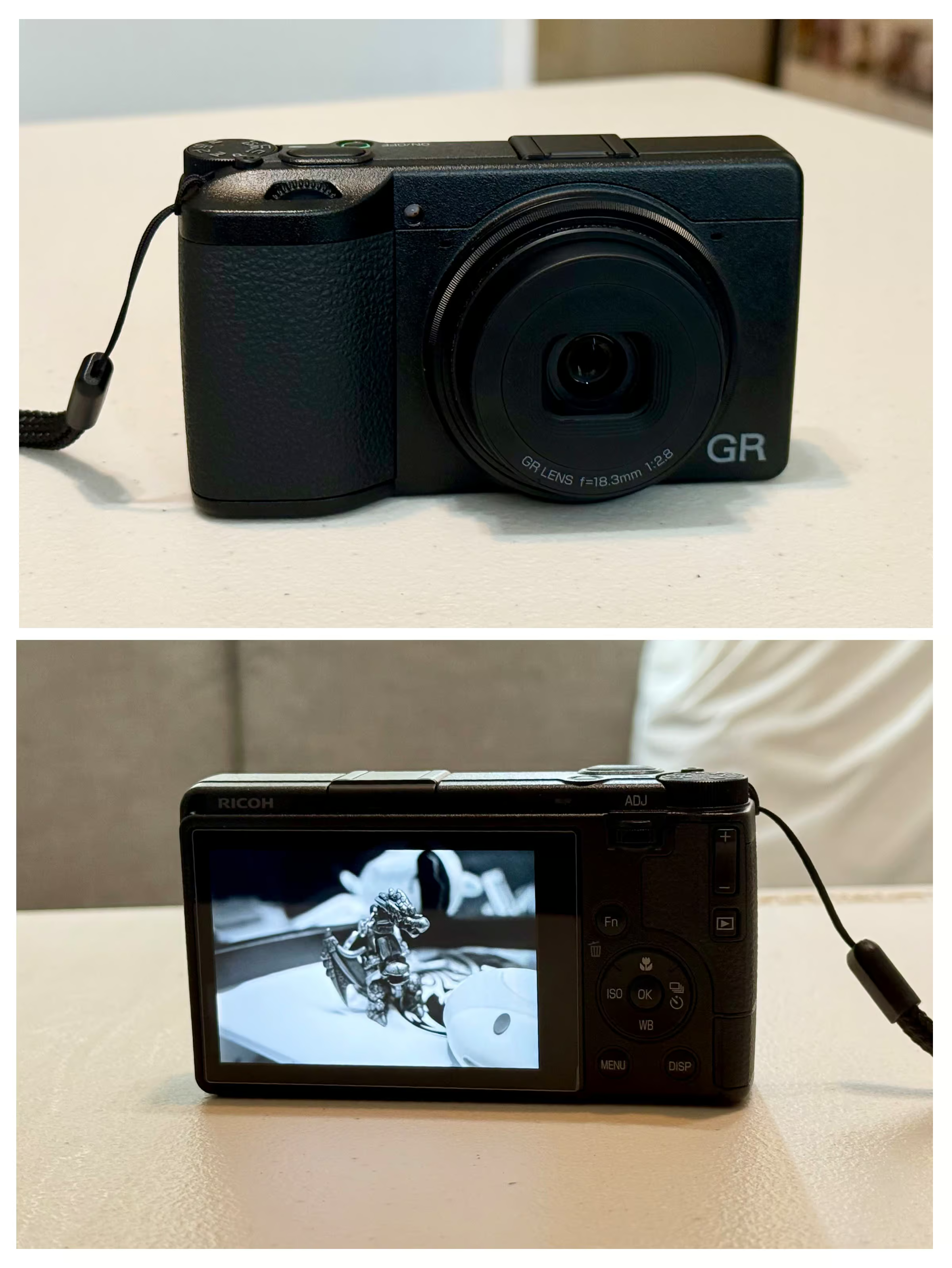
I. Love. This. Camera.
I got this camera on 00Z03 (2025-12-20), and it captured my heart almost immediately. The very first time I turned it on, I was shocked at how instantly it powered up (in just 0.6 seconds) and the lens extended, ready to shoot.
At first, it felt familiar, operating much like my older point-and-shoots, but diving deeper has been incredibly fun and educational. I’ve been learning all about the different modes, the exposure triangle (aperture, shutter speed, ISO), framing shots, and so much more.
It’s just as pocketable as my Canon PowerShot, slipping easily into the pocket of my jeans or jacket (at only about 4.31 x 2.41 x 1.29 inches and 262g), and I absolutely love its sleek, minimalist design. The image quality from the 25.74-megapixel APS-C BSI CMOS sensor is phenomenal: super sharp details with the 18.3mm (28mm full-frame equivalent) f/2.8-16 GR lens, rich and natural colors, impressive dynamic range, and strong performance even in low light thanks to the new GR ENGINE 7 processor and extended ISO range up to 204,800.
The straight-out-of-camera JPEGs are so good that I rarely touch the RAW files (though I love having the option to shoot both). My current go-to recipes are:
This has quickly become my main everyday carry camera. It’s so fast and easy to whip out, snap a photo, and pocket again. The capabilities feel endless for street photography, quick snapshots, and daily life, aided by features like 5-axis in-body shake reduction (up to 6 stops), excellent autofocus, snap focus modes, and built-in 35mm/50mm crop modes. I only grab one of my older compacts now when I specifically need a built-in flash, although the GR IV’s high-ISO performance makes flash almost obsolete for me.
The menus and controls are very intuitive to use on the 3-inch touchscreen LCD, and the camera features 53GB of built-in memory, which means I can leave my microSD card at home!
A few minor gripes: no built-in flash, no optical zoom (though the crop modes help), and video mode isn’t great (poor focusing and stabilization, but I hardly ever yearn for recording video on this camera anyway).
Accessories on my wishlist:
- An external flash, like the Ricoh GF-2 or Godox IT20 R
- a lens/filter adapter, like the Ricoh GA-3
- an infrared filter, like the Hoya R72
Check out some shots from the GR IV in my gallery.
Canon PowerShot SD1200 IS

This is my favorite “old” camera. The photos I have captured on it hold a very sentimental value to me, and have a certain aesthetic that I really enjoy.
It features a 10.0-megapixel 1/2.3-inch CCD sensor and the DIGIC 4 image processor, as well as Canon’s Optical Image Stabilizer which helps reduce blur in shots with slight motion or sub-par lighting conditions. The 3x optical zoom lens is 6.2-18.6mm (35–105 mm equivalent, f/2.8–4.9).
It has surprisingly good image quality for portraits, especially with flash in dark environments, although the flash does not have much range. Colors are punchy straight out of camera, and face-detection AF is quick and reliable. The 2.5-inch LCD screen is decent for seeing what you are shooting, and it also has an optical viewfinder.
The compact size (3.39 x 2.17 x 0.87 inches) and light weight (160 grams with battery) have allowed me to easily slip it into my suit pocket at concerts, or even carry it by hand with the wrist strap.
Nikon Coolpix L105
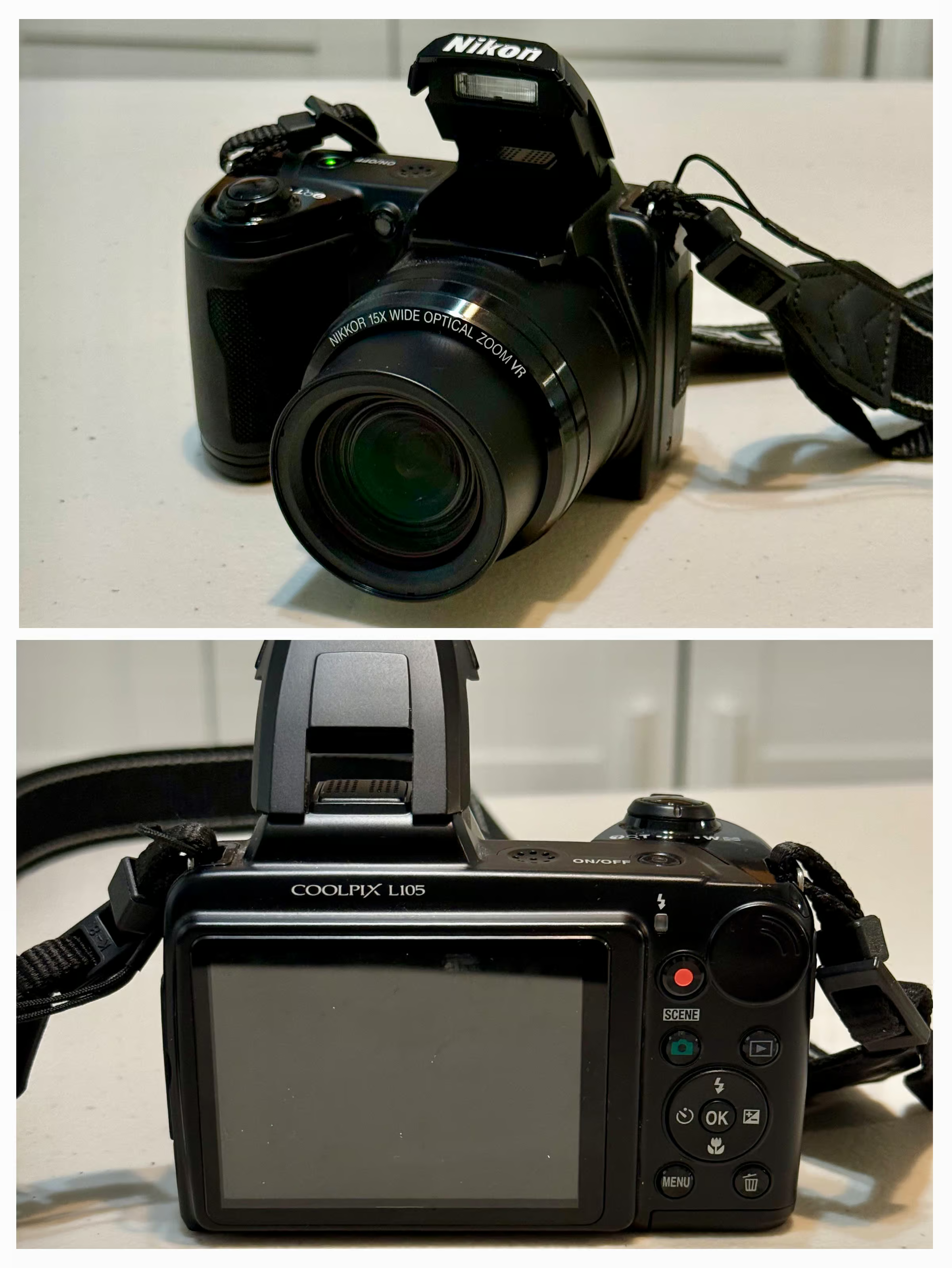
This was the first “big” camera that I ever held.
It has a 12.1-megapixel 1/2.3-inch CCD sensor, slightly better than my Powershot. It has a very nice 5.0-75.0mm NIKKOR lens (equivalent to 28-420mm full frame) with 15x optical zoom and 4x digital zoom, so I can capture all sorts of angles on this camera.
It features Nikon’s vibration reduction and contrast-detect autofocus. Additionally, the pop-up flash is very fun to use and has a very good range.
For me, the downsides of this camera are mostly about its size. It is fairly large (4.3 x 3.0 x 3.1 inches) and uses 4 AA batteries, bringing the weight to about 430 grams. It isn’t the most portable, but when I want to get better photos, use a higher zoom, or have the space available, I may opt for this camera.
Sony Cyber-shot DSC-W7
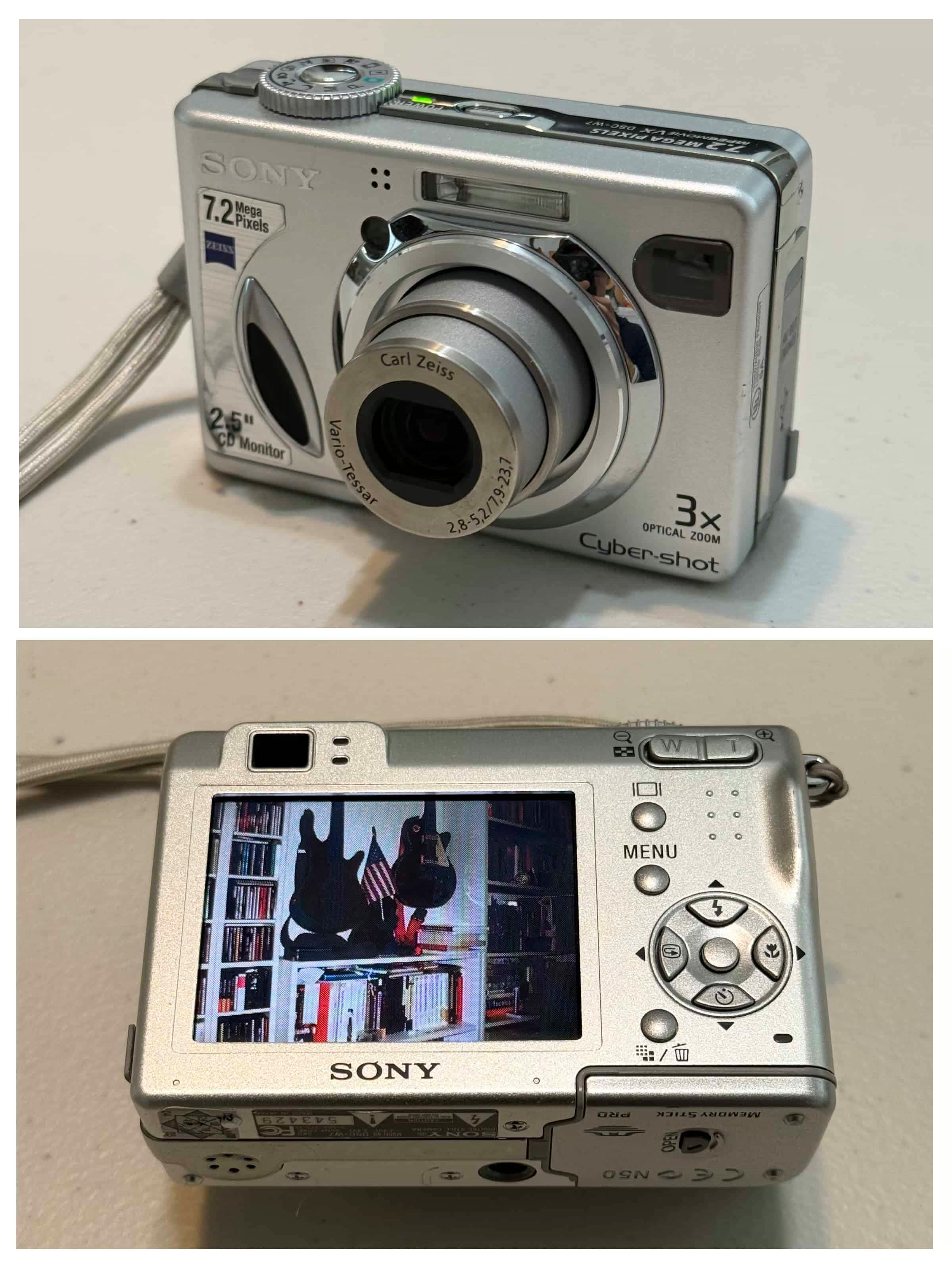
I love the aesthetic of this camera, with its large, blocky feel and tactile buttons. The mode switcher is very satisfying to use as well.
It has a 7.2-megapixel 1/1.8-inch Super HAD CCD sensor—larger than the 1/2.3-inch chips in my other two cameras—and a Carl Zeiss Vario-Tessar 7.9–23.7 mm lens (38–114 mm equivalent) with 3x optical zoom and f/2.8–5.2 aperture. It has a 2.5-inch LCD screen, as well as an optical viewfinder.
It is a bit larger than the Powershot (3.58 x 2.36 x 1.46 inches) and about 253 grams with two AA batteries. I do love its blocky feel though.
Unfortunately, I do not yet have an adapter for the Sony Memory Stick, so I cannot get photos off of the camera. Once I do, I’m excited to see how this camera’s photos compare to the others.